
San Francisco · Dogpatch
Dogpatch Real Estate
Dogpatch is a former industrial and shipbuilding district on the eastern waterfront, its brick warehouses and workers' cottages now standing alongside new construction. It has become one of San Francisco's most distinctive places to live.
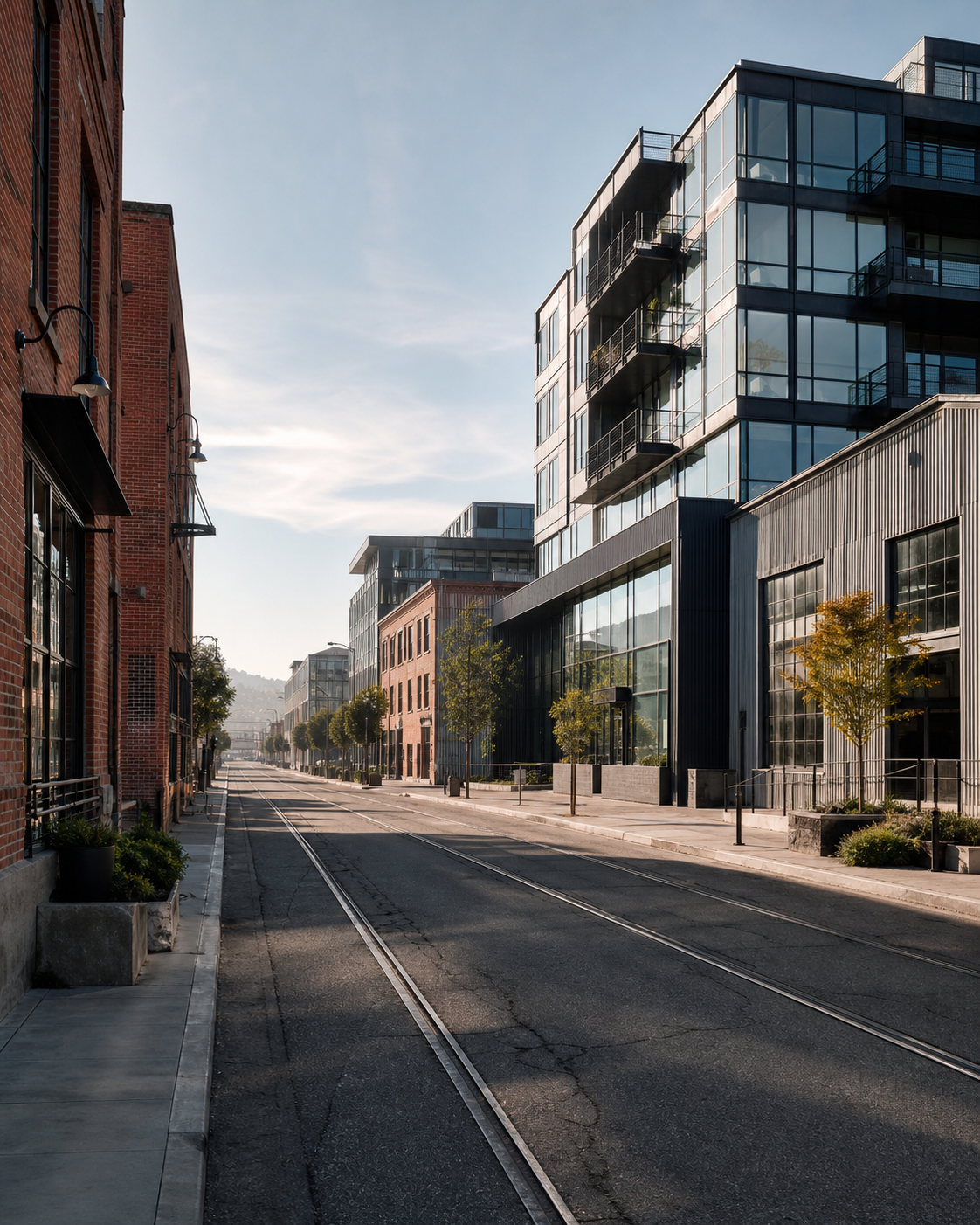
San Francisco's eastern waterfront, below Potrero Hill.
From industry to neighborhood
A Working Waterfront, Remade
Dogpatch sits on the flat eastern waterfront below Potrero Hill, one of the few parts of the city where the land doesn't climb. That flatness, and a microclimate that runs sunnier and calmer than the hills just to the west, shaped what got built here and what survived. Nineteenth-century workers' cottages still line some blocks, modest wood-frame houses that once housed shipyard and foundry labor. Brick and heavy-timber industrial buildings from that same era stand beside them, many converted into residential lofts during the neighborhood's second life, and beside those, new mid-rise construction has filled in what were long vacant industrial parcels.
The street-level character today is set by Third Street and Minnesota Street, where working artist studios, small makers and restaurants occupy ground floors that once held machine shops. The T line runs down Third Street, connecting Dogpatch north toward downtown and south through Mission Bay. The waterfront itself, with its parks and a stretch of the Bay Trail, is a short walk from almost anywhere in the neighborhood.
What you actually buy here
Three Kinds of Home,
One Neighborhood
Dogpatch's housing stock differs from the rest of the city more than almost anywhere else. What you're buying depends on which of three categories you're looking at.
Loft Conversions
True industrial-to-residential conversions: former warehouses and factory floors with high ceilings and large-format industrial glazing, often with exposed brick, timber or steel structure left visible.
Weigh: ceiling height and natural light against layout, since open conversion floor plates don't always divide into conventional rooms, and sound transmission across shared structural elements.
New Mid-Rise Condos
Newer mid-rise buildings built on formerly industrial parcels, typically with elevators, shared amenity space and more conventional floor plans than a loft conversion.
Weigh: the scope of the HOA, the health of its reserves, and the ongoing cost of maintaining the amenity space you're paying into.
Restored Cottages
A small stock of nineteenth-century workers' cottages, modest wood-frame houses built for shipyard and foundry workers, some restored, some still waiting for it.
Weigh: the realities of a small, old house built on a former industrial parcel, and what that history means for the work ahead.
Due diligence
In a Converted and Newly Built District
Dogpatch's mix of conversions and new construction raises questions that don't come up the same way elsewhere in the city. This is general guidance, not legal advice.
-
01
Read the HOA documents, budget and reserve study
In both loft conversions and new mid-rise buildings, the HOA's governing documents, current budget and reserve study tell you whether the building is funded for its own upkeep or heading toward a special assessment.
-
02
Understand the conversion history of a loft building
When a warehouse or industrial building was converted to residential use, when the work was permitted, and what was and wasn't upgraded in the process all matter and are worth asking about directly.
-
03
Soundproofing and shared-wall construction
Open conversion floor plates and exposed structural elements can transmit sound differently than conventional construction. Understand what separates your unit from its neighbors before you commit.
-
04
What the ground beneath a former industrial site means
Dogpatch's industrial past is part of the disclosure package for many parcels in the neighborhood. Review what's disclosed for the specific site, and ask what it means in practice.
-
05
New construction warranties and phased amenity delivery
In newer buildings, understand what's covered under builder warranty, for how long, and whether amenity spaces shown in marketing materials have actually been completed or are still being phased in.
General guidance only. Consult qualified legal and inspection professionals for your specific transaction.


Dogpatch
Considering Dogpatch?
Lofts, new construction and restored cottages all behave differently here. A short conversation can help you weigh which one fits.