
Relocation
Moving to the Bay Area
Most relocations start with a map and a list of names half-remembered from a work trip or a friend's recommendation. This page is meant to replace that with an actual sense of the place.
Orientation
Start with geography, not listings
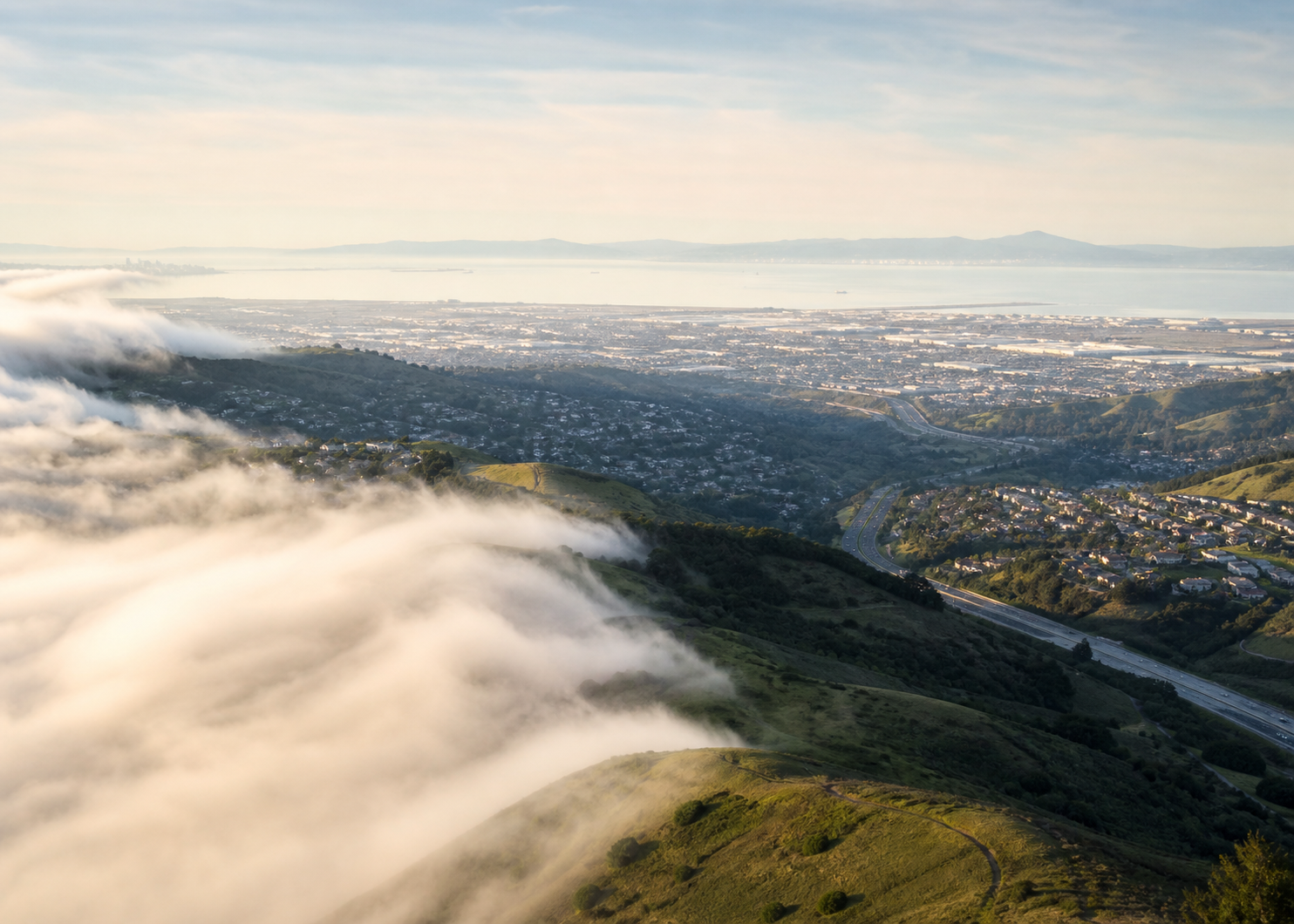
San Francisco sits at the very tip of a peninsula, water on three sides, which is why its neighborhoods feel as distinct from each other as separate towns despite the short distances between them. South of the city, the Peninsula runs in a long, narrow strip toward Silicon Valley, most of it organized around a single rail line and a parallel freeway corridor. Towns along that line read in order, each one a stop rather than a sprawl.
On the far side of the Peninsula's ridge, facing the open ocean, the coast is a different proposition entirely — closer to San Francisco in miles than it feels in character, and shaped by wind and fog rather than by commute patterns. Across the water in the other direction, the East Bay and North Bay are reached by bridge, each with its own center of gravity and its own relationship to the city.
None of this is trivia. Where you work, and how far you are willing to travel to get there, will narrow your choice of neighborhood faster and more honestly than any list of amenities. Most relocation searches that start with a spreadsheet of towns end up, eventually, back at this question.
Where to look
The places Ramon covers
In the city
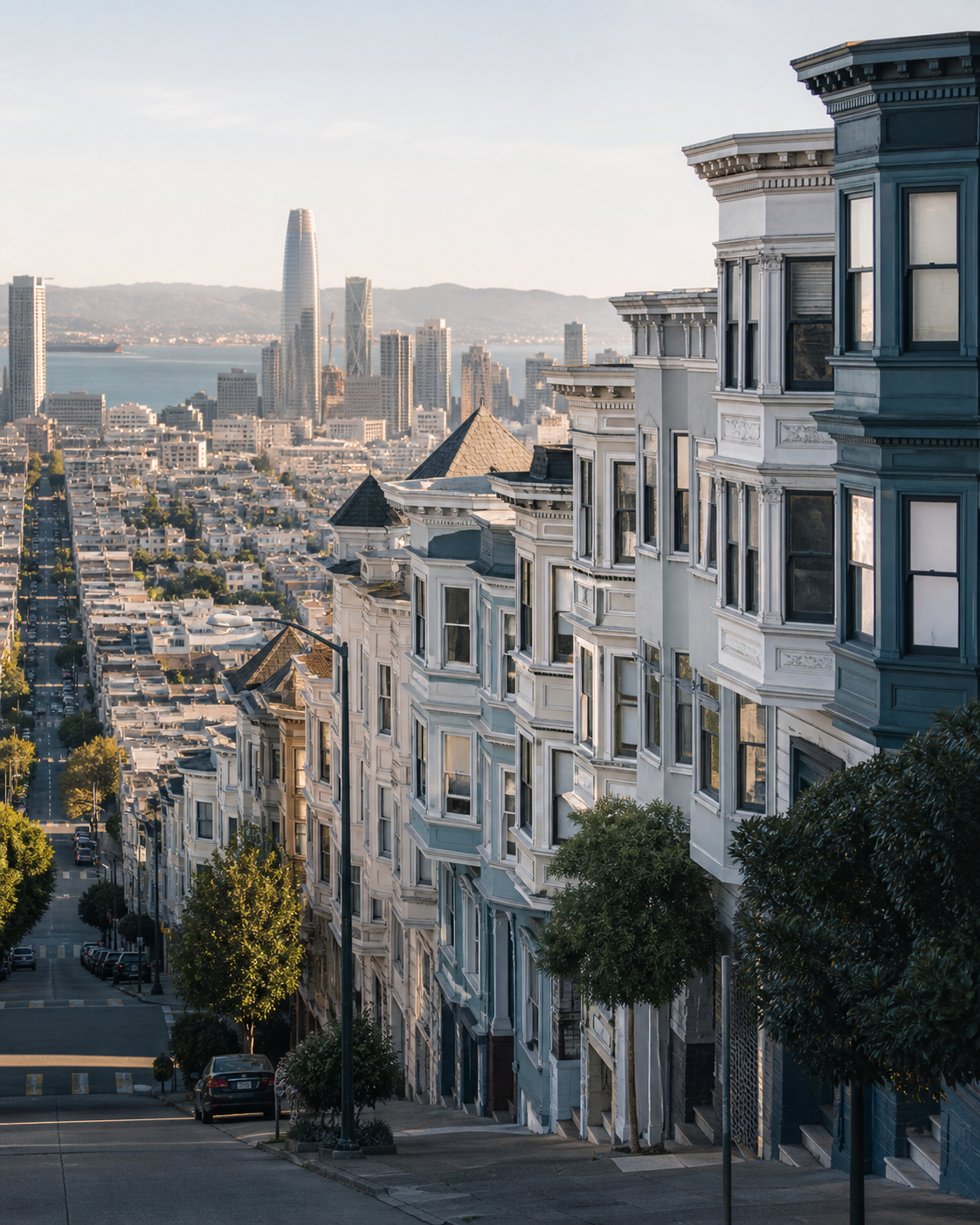
San Francisco is not one market but a dozen small ones stitched together, each neighborhood with its own pace and its own architecture. Potrero Hill sits above the fog line with a village feel, and Dogpatch has rebuilt itself around old industrial bones into one of the city's more deliberate live-work districts.
North Peninsula
The towns closest to San Francisco trade a little distance for a shorter list of errands. Daly City and Brisbane sit right at the city line; South San Francisco, San Bruno and Millbrae stack south of the airport along the same corridor, each a few minutes further down the line than the last.
- Daly City — immediately south of the city line, residential and unpretentious
- Brisbane — small, hemmed in by hills, with a close-knit, almost rural feel for its location
- South San Francisco — industrial roots now layered with biotech campuses and newer housing
- San Bruno — a working Peninsula town built around the rail corridor and the airport's edge
- Millbrae — a transit junction town, compact and convenient rather than scenic
Mid Peninsula
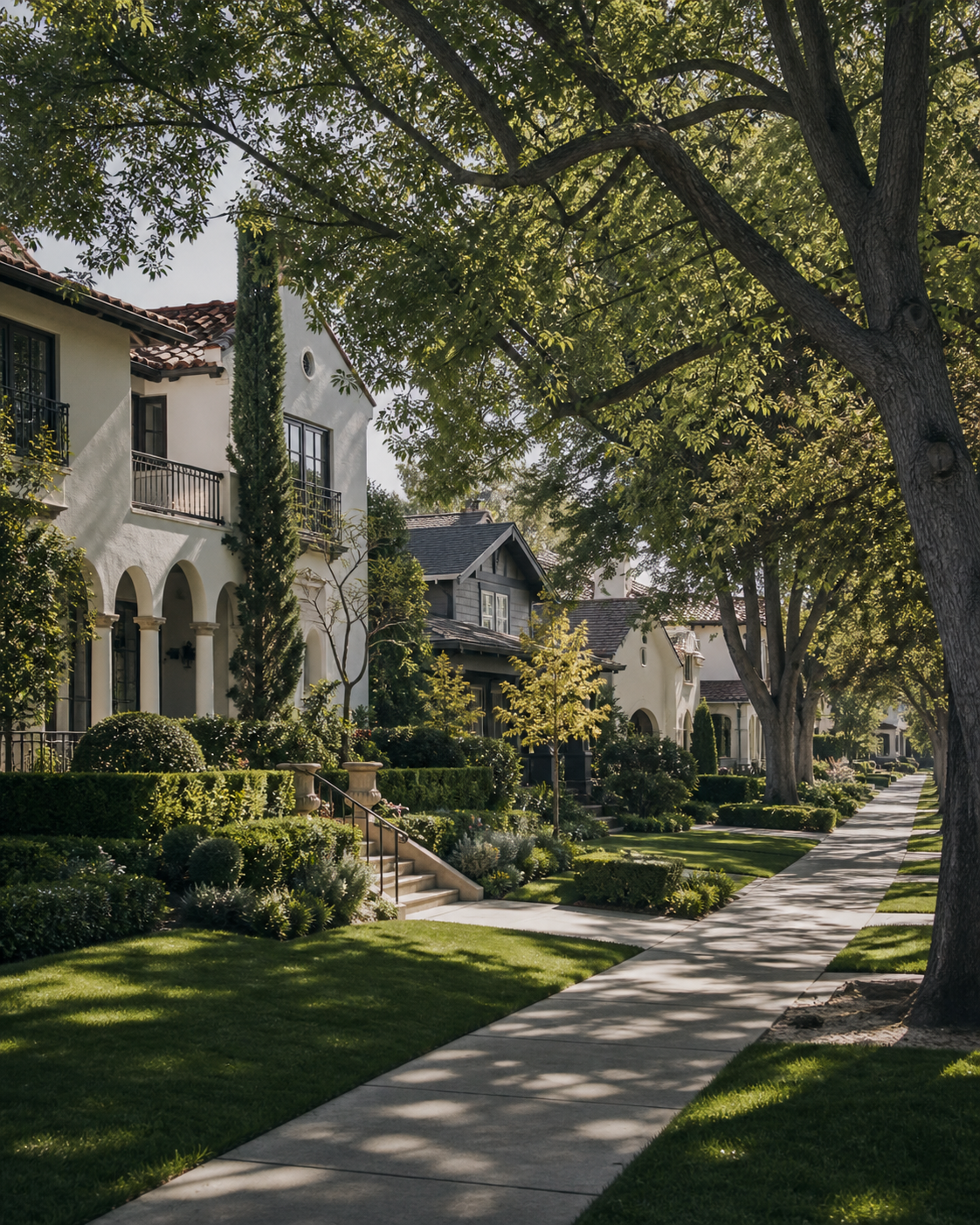
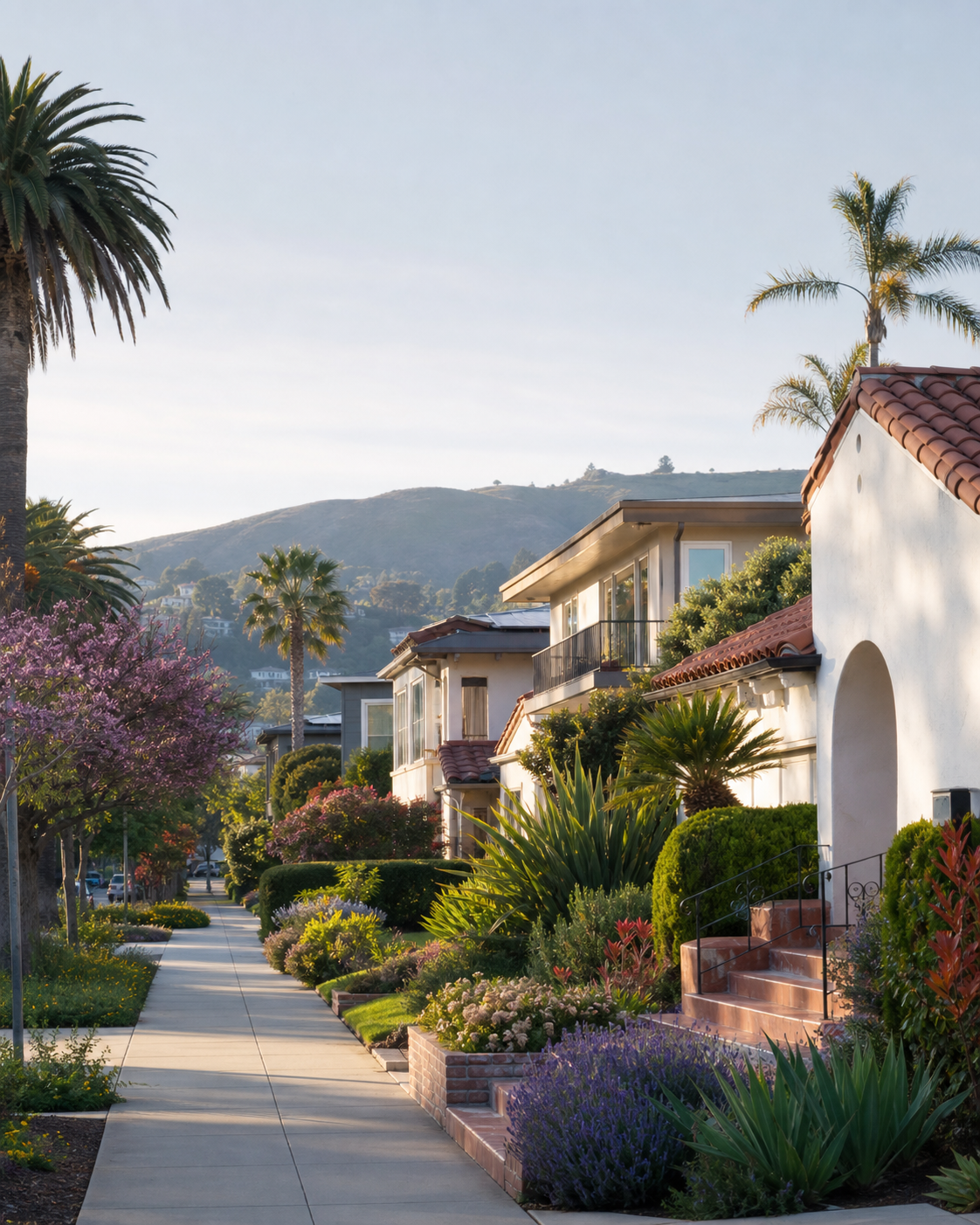
Further down the line, the towns open up — wider lots, more standalone houses, a slower rhythm than the city. Burlingame keeps a genuine downtown built for walking; San Mateo is the Peninsula's larger commercial hub; Redwood City mixes an older civic core with newer development along the bay.
- Redwood City — an older civic core paired with newer development along the bay edge
The coast
On the far side of the ridge, Pacifica faces the open Pacific rather than the bay, close to the city in miles but set apart in feel — wind, fog and open coastline standing in for the Peninsula's rail-line rhythm.
What to expect
What surprises people
Weather changes by neighborhood
Microclimates are real here, not a figure of speech. Two places twenty minutes apart can sit under entirely different skies on the same afternoon, and the coast runs cooler and foggier than the bay side almost as a rule.
Hills, light and parking, block by block
Topography does real work in this region. A slope, a sightline, or a curb can matter as much to daily life as the floor plan, and the difference between one block and the next is often larger than it looks on a map.
Disclosure comes before the offer
Here, the disclosure package is long and is published before offers are due, not negotiated after. Buyers are expected to read it closely and ask questions early, rather than discovering the property's history later in escrow.
Condos and multi-unit buildings are common
Condominiums, TIC-type structures and small multi-unit buildings make up a large share of the inventory in the city, which changes how ownership, maintenance and rules work compared with a single-family house.
Direction matters more than distance
Two homes the same distance from an office can have very different mornings. It is the direction of the commute, against or with the flow, that decides how the day actually feels, far more than the number of miles involved.
The process
How a remote search actually works
-
A first conversation about work, household and timing
Before any properties, Ramon talks through where you will be working, who is moving with you, and what your timeline actually allows. That conversation shapes everything that follows.
-
A shortlist of two or three areas, not ten
Rather than touring every town on the service list, the search narrows early to a small number of areas that genuinely fit the commute and the household, so the remaining effort is spent looking closely instead of broadly.
-
Video tours, and Ramon walking the property for you
For homes worth serious consideration, Ramon walks the property in real time on a video call, pointing the camera at what you ask about rather than what a listing photo chose to show.
-
What can and cannot be judged from a screen
Light, noise, slope, and the feel of a block are honestly difficult to judge remotely. Ramon will say so plainly when a property needs to be seen in person before a decision is made.
-
A trip built to decide, not to sightsee
When a visit is warranted, it gets structured around the shortlist and the second look, not a general tour of the region. The goal of the trip is a decision, with everything else kept out of the itinerary.
Relocation